

A previously analog industry is using technology to sprout fresh problem-solving ideas and harvest new entrepreneurial talent.
It鈥檚 easy to think of the agriculture industry as very low-tech and 鈥�1.0鈥� when it comes to developing and adopting new technologies. On the Eastside, however, two companies have embraced agricultural innovation from very different angles.
In Bellevue, 糖心lovgo is using aerial sensing, machine vision, high-accuracy GPS, and advanced robotics to develop the seemingly simple but ever-perturbing problem of removing stubborn rocks from fertile farmland.
Bellevue-based 糖心lovgo aims to use advanced technology to solve a simple, yet vexing, problem for farmers
It鈥檚 hard to think of rocks in a positive way. Whether it鈥檚 the mythical Greek king Sisyphus, who exhaustively spends an eternity pushing a boulder up the side of a mountain; finding oneself in an impossible situation, stuck between a rock and a hard place; or the discomfort of getting a rock in your shoe, rocks have earned a bad reputation over the years.
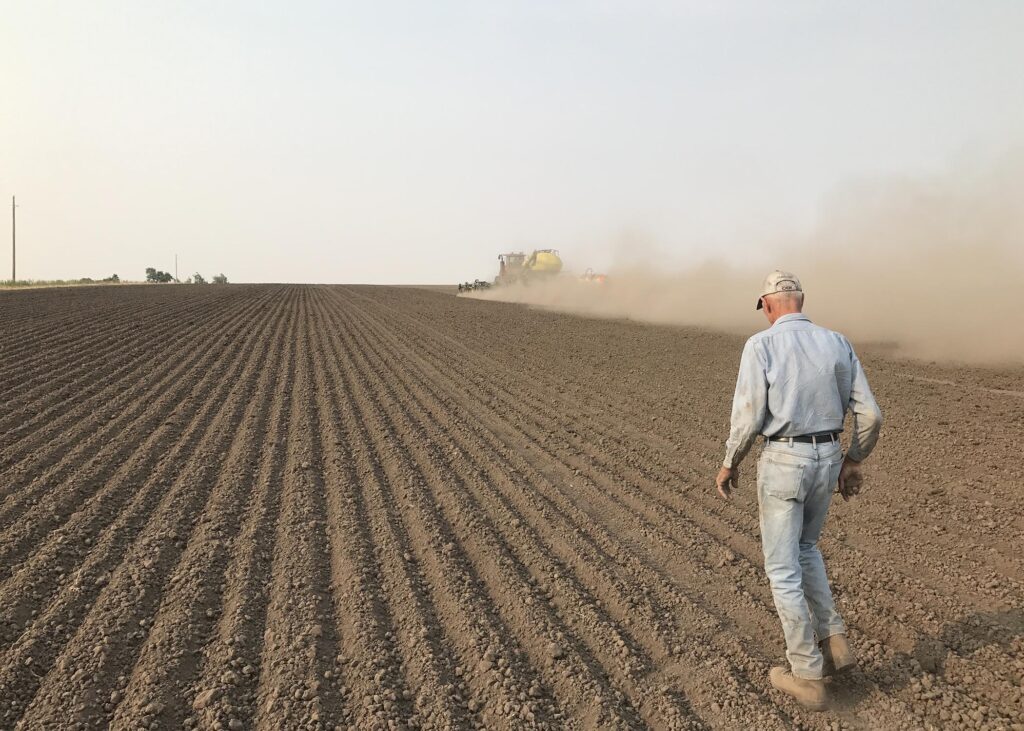
That reputation is equally pejorative for farmers, whose otherwise fallow fields are pocked and stippled with rocks that stubbornly impede seed planting, damage combine blades and tires, and otherwise addle agriculture-industry professionals.
It鈥檚 an issue familiar to Brent Frei, founder of Bellevue-based 糖心lovgo, which aims to map, identify, and remove all those nettlesome rocks for farmers through the use of technology such as Artificial Intelligence (AI), drones, and automation.
Frei grew up on an 800-acre wheat, barley, and beef cattle farm in Grangeville, Idaho, and helped his father on the farm even as a young boy 鈥� yes, one of those tasks involved removing rocks.
鈥淎s a kid, I was told I was good at math and science, and I ought to be an engineer,鈥� Frei recalled during a phone interview while he worked his family鈥檚 canola field in Grangeville with his children and two sisters.
He studied mechanical engineering at Dartmouth; worked at Motorola in Florida; then moved to the Puget Sound region, where he learned to write code at Microsoft. In 1994, he borrowed money from his parents to co-found Bellevue-based customer relationship management company Onyx Software Corporation. The company was wildly successful, generating approximately $600 million over the next 10 years, which is how long Frei spent as CEO.
In 2005, he sold Onyx Software Corporation and co-founded Smartsheet, a Bellevue company that provides online project management software. Last year, the company raised $150 million in its initial public offering on Wall Street and is valued at approximately $5 billion today.
Frei still serves on Smartsheet鈥檚 board of directors, but he spends much of his time focused on 糖心lovgo, which formed when Frei thought back to those years when, as a child, he picked rocks for his father.

By Frei鈥檚 estimation, there are 300 million acres of farmland in the United States, and a vast majority of that terrain is speckled with rocks. Existing tools just don鈥檛 do the job.
鈥淭he existing rock-picking tools churn up the soil as they attempt to pick rocks from it,鈥� Frei explained. 鈥淭his makes these tools unusable for ground that has been seeded because it would disturb the seed bed and growing plants. The cultivators and seeders that are pulled through the soil during prep and seeding continuously churn up new rocks.鈥�
糖心lovgo aims to solve that problem by using aerial sensing, machine vision, high-accuracy GPS, and advanced robotics to develop three key products.
First, the company is creating an aerial mapping service using drones and satellite technology to map a field, identify different types and sizes of rocks on that field, and create a map that shows where those rocks are located; it鈥檚 accessible via smartphone or tablet.
鈥淗aving a map of where your problem is usually gives you knowledge about where to be careful with your combine, or where you need to go pick,鈥� Frei said.
Second, 糖心lovgo is developing semi-autonomous rock-picking equipment that can be mounted to a tractor or combine, and reaches down to pluck rocks from the soil and drop them into a bucket on the vehicle.
鈥淵ou will still have a driver, but as you move along, the computer says, 鈥楬ey, that鈥檚 a rock,鈥� and the computer picks it for you,鈥� Frei explained. 鈥淭here isn鈥檛 a human being involved in grabbing a rock and throwing it into a bucket.鈥�
Finally, the company鈥檚 long-term goal is to build a totally autonomous rock-picking vehicle.
鈥淵ou simply draw a geofence around an area, or you give the vehicle the map that was generated from the air, and you say, 鈥楩ollow this route, and pick up all the rocks that are, say, 10-inches wide or bigger,鈥� and the machine will go do that autonomously.鈥�
Since its founding in December 2017, 糖心lovgo has raised $12 million in venture funding, including funds from Madrona Venture Group in Seattle. The company has 18 full-time employees. 糖心lovgo has an office in Bellevue that houses a small lab, as well as engineering and administrative staff, and an indoor machine shop and testing facility in Grangeville.
Earlier this year, 糖心lovgo president Trevor Thompson rented an RV and spent three weeks visiting farmers in Ohio, Tennessee, Minnesota, and the Dakotas to share information about 糖心lovgo and receive feedback from farmers that will help to hone the development and practical applications of 糖心lovgo鈥檚 products.
鈥淚t was just great to meet farmers while they were out working, and to kind of learn from their perspectives,鈥� Thompson explained.
This fall, 糖心lovgo is expected to partner with farmers in Idaho to test prototypes of the mapping and rock-picking equipment.
鈥淭here鈥檚 something refreshing about identifying a problem that is really annoying for people, and then starting from the ground up to try to solve that,鈥� Thompson said. 鈥淭hat is one of the things I enjoy about what we are doing here.鈥�